VCLearn
system LOAD VERSION::v1.8.0

VCLearn

Unifying report cards, class operations, and learning workflows into one role-aware platform for Vine Crest Schools

Final Solution
PRODUCT IMAGE

EXECUTIVE SUMMARY

01. THE CHALLENGE

School operations were spread across disconnected academic, reporting, and administrative workflows. The product needed to support different user roles, expose only the right features to each audience, and ship safely in phases without disrupting day-to-day school operations. Because the platform serves a real school, the case study also needed to respect privacy and present the work without exposing internal access.

02. MY SPECIFIC ROLE

UX/UI designer, full-stack developer, and team lead for two other full-stack developers. I owned product UX direction, frontend and backend implementation, technical architecture decisions, and delivery coordination across the team.

03. FINAL OUTCOME

Delivered a modular Django + React platform that supports role-based access, report card workflows, class management, dashboard insights, and phased feature releases. The system now exposes versioned APIs, role-aware navigation, and release-driven operational tooling that makes the platform easier to evolve without blocking school staff, while the portfolio presentation relies on curated screenshots instead of direct public access.

The Launch Insight

"The biggest product insight was that the platform did not need every academic feature to launch at once. By centering the rollout on report-card visibility and wrapping adjacent functionality in feature flags, the product could deliver immediate value to the school while reducing deployment risk. That shift turned release planning from a blocker into a product capability."

From Monolith Behavior to Controlled Rollout

A major iteration was moving from an all-or-nothing release mindset to a phased delivery model backed by feature flags and clearer API boundaries. The project combines a Django backend with a React frontend, and recent work formalized versioned API routes, role-aware dashboard behavior, and release documentation so new capabilities can be introduced gradually instead of forcing a disruptive big-bang launch.

INTERACTIVE PREVIEW MODE

Results & Reflection

Role-Based Platform

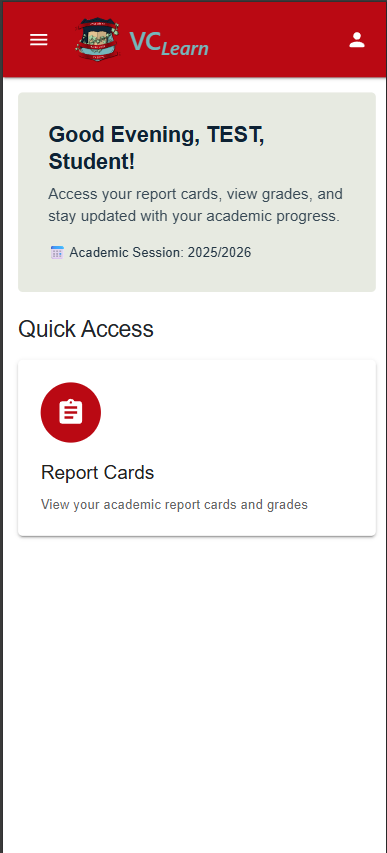
Admin, teacher, and student experiences supported

Release Strategy

Phased launch and feature-flag workflow documented

Operational Visibility

Dashboard stats and unpaid-fee tooling improved

SYSTEM RETROSPECTIVE // LESSON LEARNED

In complex school software, the real win is not just adding features. It is designing the product so that sensitive workflows like reporting, fees, and classroom operations can evolve safely, predictably, and per role without creating friction for staff or learners. That same discipline should carry into the case study itself, where privacy and access boundaries matter as much as polish.

<< Architecture & Trade-Offs // FOR DEVELOPERS & STRATEGISTS >>

STRATEGIC TRADE-OFFS

The platform balances delivery speed with operational safety. A phased rollout means some advanced capabilities stay behind flags longer than the team might prefer, but that trade-off reduces rollout risk for a live school environment. The architecture also maintains legacy endpoints alongside versioned API routes, which adds maintenance overhead in the short term but preserves compatibility while the frontend evolves. For the portfolio, the same trade-off applies: screenshots communicate the work safely, while direct public access remains intentionally restricted.

THE MESSY MIDDLE

An implicit lesson from the project history is that shipping everything as one release creates unnecessary coupling between features. The move toward phased launch documents, explicit feature controls, and more intentional module boundaries suggests the earlier approach made coordination and release confidence harder than it needed to be. The stronger pattern was to make launch state an explicit part of the system design.

ADDITIONAL DEEP DIVE RESOURCES

Overview

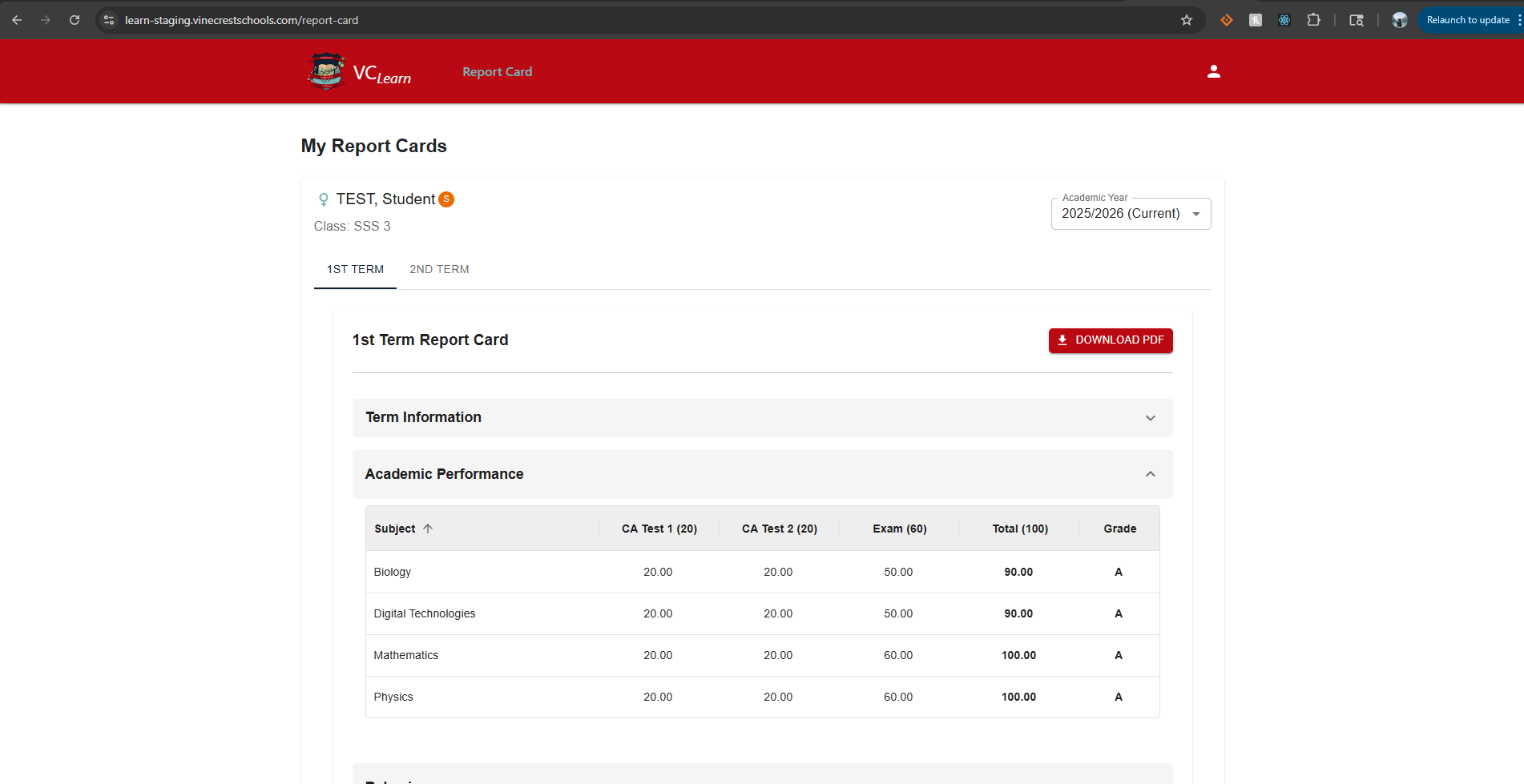
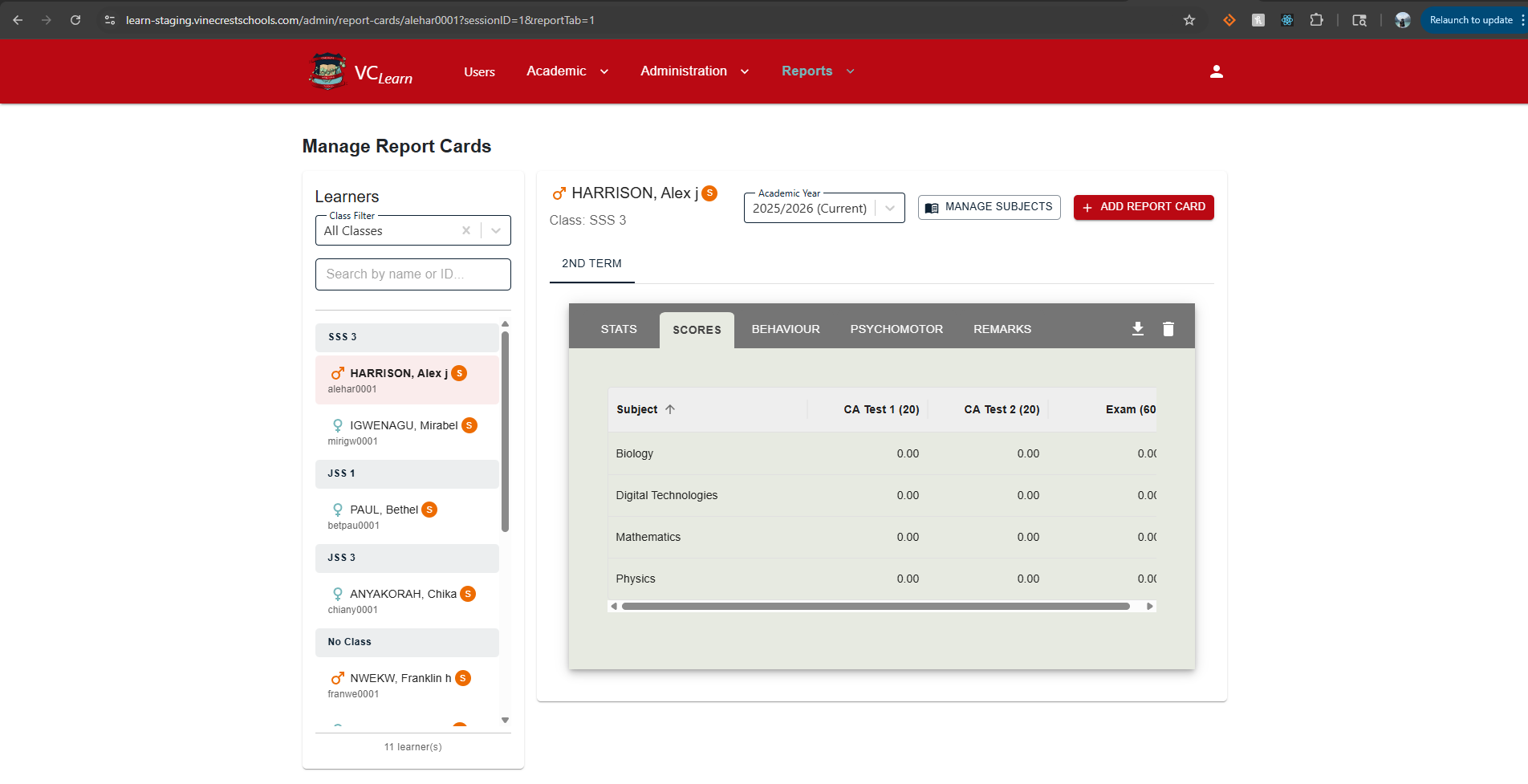
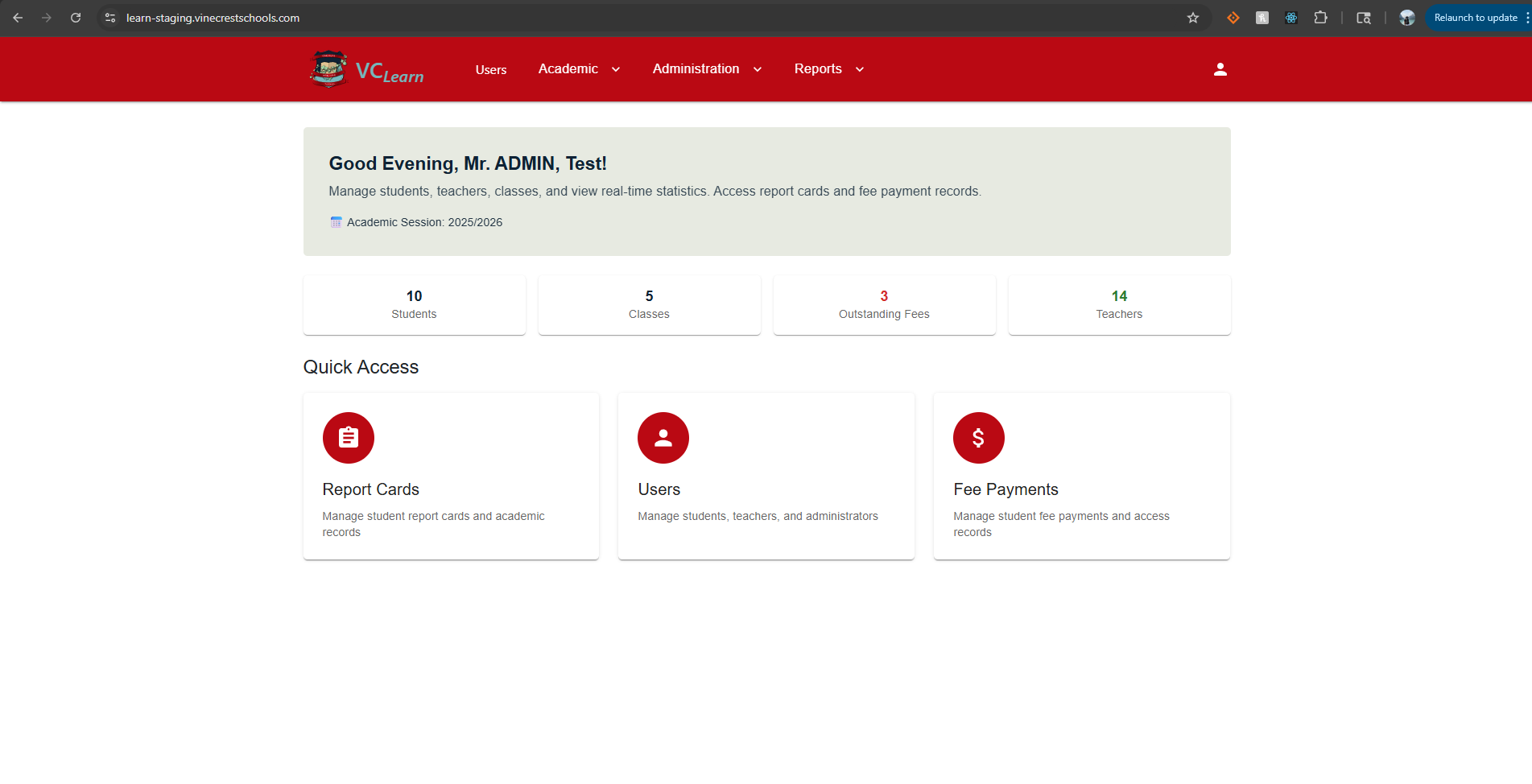
VCLearn is a school operations and learning platform built for Vine Crest Schools. It brings together academic workflows that are often split across separate tools, including report cards, classes, course sessions, user management, role-aware dashboards, and supporting registrar operations.

The product is live in production for Vine Crest Schools, but access is restricted to authorized users and the repository is private. For that reason, this case study is documented with curated screenshots instead of a public demo link or source code link.

Problem

Educational software has a difficult balance to maintain: it must be flexible enough for administrators, efficient for teachers, and simple for students, while still protecting sensitive academic workflows from disruption. In practice, that means every release has product risk, not just engineering risk.

For VCLearn, the challenge was not only to build features, but to shape the platform so it could grow safely over time.

Approach

The application uses a Django backend with versioned API routes and a React frontend organized by product area. That structure supports distinct modules such as report cards, classes, dashboard statistics, course sessions, resources, and user management.

A key product decision was introducing a phased rollout strategy. Instead of treating launch as a single event, the system was documented and structured around feature flags and release phases. This made it possible to prioritize the most operationally valuable workflows first, especially report-card access and administrative visibility, while deferring higher-risk capabilities until they were ready.

What I Like About This Project

What makes VCLearn especially strong as a case study is that it is not just a UI project or just a backend project. It shows full-stack thinking:

  • product architecture
  • role-based experience design
  • operational tooling
  • release strategy
  • testing and documentation discipline

It also demonstrates an important product mindset: in real environments like schools, safe delivery is part of the feature set.

Key Takeaway

VCLearn represents the kind of system work I enjoy most: software that has to be practical, maintainable, and trustworthy in daily use. The most valuable outcome was not simply shipping more screens. It was creating a platform and release model that can keep improving without destabilizing the people who depend on it.